
Low Water Pressure in One Faucet? Here's What Usually Causes It
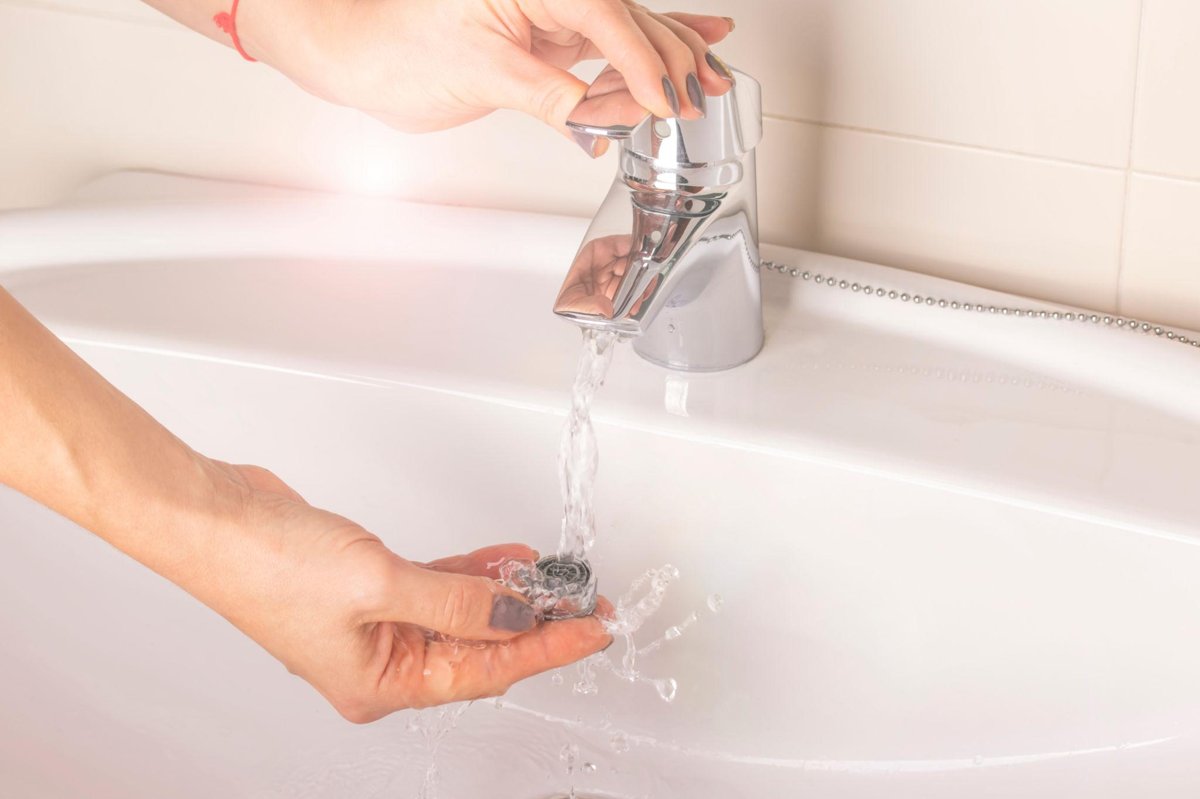
Weak flow at one faucet while the rest of the house is fine? That's good news. A whole-house pressure problem is a big, expensive hunt. A single weak fixture is almost always a small, cheap, local fix — often one you can do in ten minutes with a towel and a pair of pliers.
The first thing a plumber does with a low-pressure complaint is ask: is it one fixture or all of them? That single question splits the problem in half. All of them points to the main, the pressure regulator, or the well system. Just one points to that fixture alone — and there are only four likely suspects.
The reframe: low pressure at one faucet isn't a pressure problem — it's a blockage or a worn part at that faucet. On the South Coast, hard water makes the most common cause almost a certainty.
By the end of this you'll be able to:
→ Confirm it's really just one fixture
→ Clean the aerator — the fix for most cases
→ Check the supply valves and lines under the sink
→ Know when it's the cartridge or a job for a plumber
Tools you'll need for this job
If you want to do it yourself, here are the tools you'll need:
As an Amazon Associate, SouthCoast Plumbers earns from qualifying purchases.
First, confirm it's only one fixture
Check hot and cold separately. Turn on just the hot, then just the cold. If only the hot side is weak, the issue is more likely at the water heater or that hot supply line; if both are weak at this one faucet, it's the faucet itself. Then check a couple of other faucets to confirm the rest of the house is fine. Once you've established it's this fixture, work the suspects below in order — cheapest and most common first.
Suspect 1: A clogged aerator (the usual culprit)
The aerator is the little screened tip that screws onto the end of the faucet, and on the South Coast it clogs with hard-water mineral scale and grit. This is the cause most of the time. Unscrew it by hand (or with pliers padded by a towel so you don't scratch it), and you'll likely find the screen caked with white or sandy buildup.
The fix: rinse and scrub the screen, soak it in white vinegar for an hour to dissolve the scale, rinse again, and reinstall. Run the faucet with the aerator off for a second first to flush loose debris. Costs nothing, and it's a brand-new aerator for a couple of dollars if it's too far gone.
Suspect 2: A partly closed supply valve
Under the sink are two shutoff valves — hot and cold. If one got bumped or was never fully reopened after a repair, it throttles the flow to that fixture. Make sure both are turned all the way open (counterclockwise). This is a 30-second check that solves more cases than people expect.
Suspect 3: A kinked or restricted supply line
The flexible braided supply lines feeding the faucet can kink behind the cabinet or collect debris inside. Look for a sharp bend and straighten it. If a line is old or you suspect it's blocked internally, replacing a supply line is inexpensive and easy.
Suspect 4: A worn or clogged cartridge
If the aerator's clean, the valves are open, and the lines are clear, the faucet's internal cartridge is likely scaled up or worn. The cartridge is the part that mixes and controls flow inside the faucet body. Replacing it is a manufacturer-specific job — doable for a confident DIYer with the right replacement part, but it's also a fine point to call a plumber, especially on an older or unusual faucet.
The 10-minute fix order
1. Confirm it's only this faucet (check hot vs. cold, check other fixtures).
2. Clean the aerator — soak in vinegar. Fixes most cases.
3. Open the supply valves all the way under the sink.
4. Straighten or replace a kinked supply line.
5. Still weak? Replace the cartridge, or call a plumber.
When it's not just one faucet after all
If you find the weak pressure is actually showing up at several fixtures, or the whole house, this isn't your fix — that points to the main shutoff being partly closed, a failing pressure-reducing valve, corroded galvanized pipe (common in older South Coast homes), or a well/pump issue. Those are whole-house problems with their own playbook.
The bottom line
Low pressure at a single faucet is one of the most satisfying fixes in the house because it's almost always small. Clean the aerator first — on the South Coast that solves it most of the time — then check the valves and the supply line, and only then suspect the cartridge. If the weakness turns out to be everywhere, that's a different, bigger problem.
One weak faucet is a ten-minute fix. The whole house going weak is the real call.
Keep reading: How to Fix Low Water Pressure in Your House · Hard Water & Mineral Scale in Massachusetts · Brown Water & Low Pressure: Galvanized Pipes
Tools & parts for this fix
The usual single-faucet fixes:
As an Amazon Associate, SouthCoast Plumbers earns from qualifying purchases. Prices and availability are set by Amazon.
Cleaned everything and it's still weak — or it's the whole house?
That's a cartridge, a regulator, or aging pipe. Browse trusted local plumbers on the South Coast with customer and peer scores.
Find a plumber