
How to Get Rid of Sewer Gas Odor in Your House
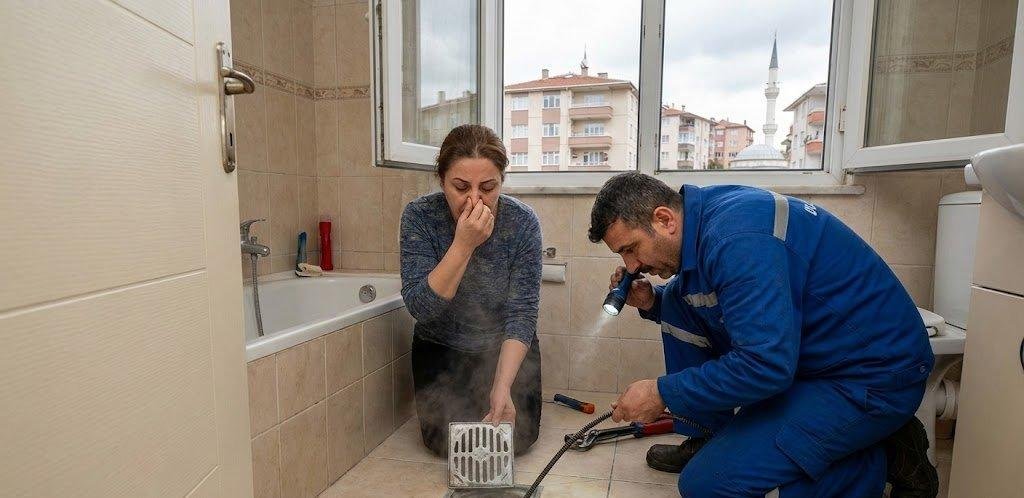
A sewer gas smell isn't a dirty-drain problem you can scrub away. It's gas escaping a system that's supposed to be sealed against your living space. Find the breach and the smell is gone for good. Mask it, and it comes right back.
Your home's drain system is built to be a one-way door: waste and gas go out, nothing comes back in. Every drain holds a small plug of water — a P-trap — that blocks sewer gas, and a network of vent pipes lets the system breathe so those traps don't get siphoned dry. When the whole house smells, one of those barriers has failed somewhere. The job is finding which one.
The reframe: sewer gas in the house means a seal is open, not that something is dirty. Older New England homes have more places for that seal to fail — long-unused fixtures, aging cast-iron, vent stacks that have shifted over a century of settling.
By the end of this you'll be able to:
→ Understand why a working drain still keeps gas out
→ Hunt the smell room by room and narrow the source
→ Fix the easy causes — dry traps, bad seals — yourself
→ Recognize the vent and pipe problems that need a plumber
Tools you'll need for this job
If you want to do it yourself, here are the tools you'll need:
As an Amazon Associate, SouthCoast Plumbers earns from qualifying purchases.
Start with the most common cause: a dried-out trap
Every drain you rarely use is a suspect. The water in a P-trap evaporates over weeks of no use, and once it's gone, the drain becomes an open pipe to the sewer. This is the number-one cause of a mystery sewer smell, especially in:
→ A guest bathroom or basement floor drain nobody uses
→ A laundry sink or utility tub
→ Any fixture in a seasonal room or a part of the house you've closed off
The fix is free: run water in every sink, tub, and shower for 30 seconds, and pour a couple of quarts down any floor drain. If the smell fades over the next day, a dry trap was it. For a drain that dries out repeatedly, a little mineral oil on top of the water slows evaporation.
Then go room by room
The location of the smell narrows the source fast.
Kitchen: a sewer smell here is often the disposal or a fouled trap, not the sewer itself — but rule out a dry trap first. Bathroom: usually the toilet's wax ring or a dry shower/sink trap (we cover the toilet case in depth in a separate guide). Basement: floor drains and the main cleanout are the usual culprits — check that the cleanout cap is on tight and the floor-drain trap has water. Whole house, no single room: that points up, to the vent — keep reading.
Check the seals you can reach
A failed wax ring under a toilet lets gas seep around the base — the tell is a smell that's strongest at floor level near the bowl, sometimes with a rocking toilet. A loose or dried-out seal on a rarely used fixture does the same. These are DIY-able for a handy homeowner; a rocking toilet needs to be reset on a fresh ring.
The sources that need a plumber
A blocked or broken vent stack. If traps keep losing their water no matter how often you fill them — or you hear a gurgle and then smell gas after a big drain empties — the vent isn't doing its job. A clog (leaves, a bird's nest, ice in winter) or a cracked vent line lets drains siphon their own traps dry. That's roof-and-stack work for a pro.
Cracked or corroded drain lines. In older South Coast homes, cast-iron drains rot from the inside and clay lines crack, letting gas leak into wall cavities, crawl spaces, or the basement. The smell is constant and doesn't track to one fixture. A plumber confirms it with a camera.
A note on safety: sewer gas is mostly an irritant and a nuisance, but in high concentrations it's hazardous — and a "rotten egg" smell can also be a natural gas leak, which is a true emergency. If the odor is strong, persistent, or you feel unwell, ventilate and call a professional rather than living with it.
The hunt order
1. Run every drain — refill dry traps. Fixes most cases.
2. Locate the smell — which room is it strongest in?
3. Check reachable seals — toilet base, floor-drain cap, cleanout.
4. Traps keep drying or smell is house-wide? Suspect the vent.
5. Constant smell, no single source? Camera the lines — call a pro.
The bottom line
A whole-house sewer smell is a broken barrier, not a dirty house. Start by refilling every trap — that solves more cases than anything else — then work room by room to the seals you can reach. If traps won't stay full or the smell never tracks to one spot, the vent or the buried pipe is the problem, and that's where a plumber earns the call.
You don't deodorize sewer gas. You find the open door and shut it.
Keep reading: Sewer Smell Coming From the Toilet? · How to Get Rid of a Sewer Smell in Your Bathroom · Cast Iron Drain Pipes & Sewer Smell
Tools & parts for this fix
What clears sewer-gas odor for good:
As an Amazon Associate, SouthCoast Plumbers earns from qualifying purchases. Prices and availability are set by Amazon.
Traps won't stay full, or the smell won't quit?
That's a vent or buried-line problem — camera work for a pro. Browse trusted local plumbers on the South Coast with customer and peer scores.
Find a plumber