
How to Get Rid of a Sewer Smell in Your Bathroom
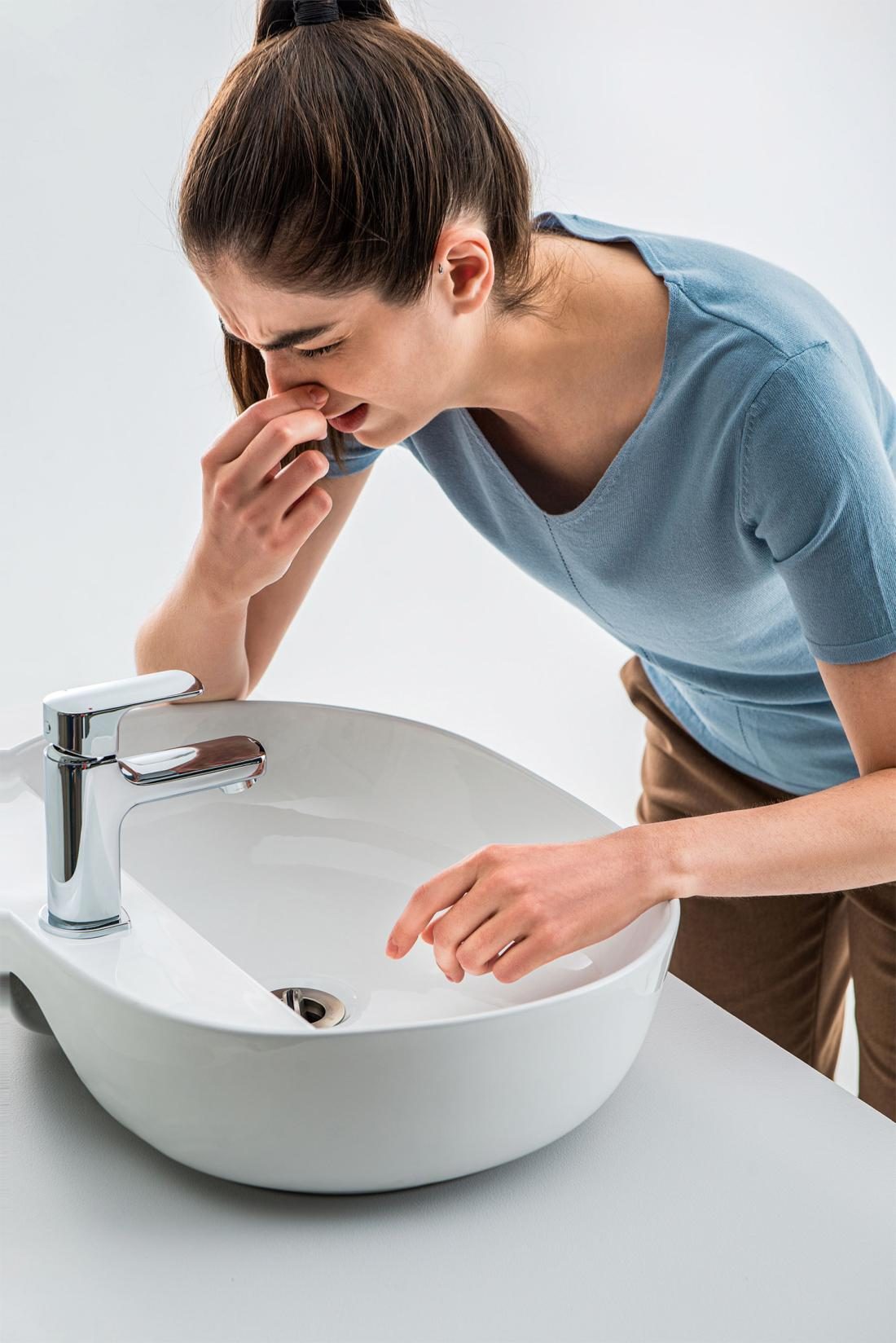
That sewer smell isn't a cleaning problem — it's sewer gas getting past a barrier that's supposed to seal it out. The most common cause takes a cup of water to fix. The catch: a few of the causes are genuinely unsafe, so don't just mask the smell and move on.
The instinct is to spray air freshener and scrub harder. That hides the warning and changes nothing. Your plumbing is designed so sewer gas never reaches the room — every fixture has a water barrier and the whole system breathes through a roof vent. A smell means one of those defenses has a gap. Find the gap; the smell goes with it.
The reframe: a sewer smell isn't filth in the room — it's a broken seal somewhere in the system. Track it to the fixture, and you'll land on one of a few specific failures: a dried-out trap, a bad toilet seal, or a venting problem. The odor is just telling you which barrier slipped.
By the end of this you'll be able to:
→ Refill a dry P-trap — the number-one cause, fixed in seconds
→ Spot a failing toilet wax seal (the rocking, the smell at the base)
→ Recognize a venting or sewer-line issue that needs a pro
→ Follow the one rule: find the broken seal, don't perfume over it
Phase 1 — Refill the trap (start here)
Start here because… every drain holds a little water to block gas, and an unused drain dries out — a sink trap can go dry in under 30 days.
Run the water. Smell coming from a guest sink, a floor drain, or a tub you rarely use? Run water for a minute to refill the trap. Add a cup down a floor drain. The fix is literally water. Watch-out: a splash of mineral oil on top in a rarely-used drain slows future evaporation.
Phase 2 — Check the toilet seal and clogs
What you're dealing with is usually… a toilet that rocks or smells at its base has a broken wax ring letting gas escape where it meets the floor.
Test for movement. Gently see if the toilet rocks, and watch whether the bowl loses water between uses. Either sign points to the wax seal. Watch-out: replacing a wax ring means pulling the toilet — an experienced DIY job or a quick pro call.
Clear a smelly shower drain. A slow, smelly shower drain is usually hair and soap scum harboring bacteria — clear it mechanically and the smell often goes with the clog.
Phase 3 — The venting and sewer-line causes (pro territory)
In most cases: if the traps are full and the toilet's solid but the smell remains, the problem is in the vents or the main line.
Listen and look up. Gurgling drains and traps that keep going dry suggest a blocked or broken vent stack — the pipe through your roof that lets the system breathe. Watch-out: this is a rooftop, specialized-equipment job — don't DIY it.
Treat a sewage smell as serious. A strong, whole-house sewage odor — especially with gurgling and slow flushes — can mean a sewer backup or septic issue. Don't tough it out: prolonged sewer gas exposure is genuinely hazardous. Ventilate and call a pro.
The find-the-seal routine
1. Rarely-used fixture? Run water / add a cup to refill the trap.
2. Smell near the toilet base + rocking? Suspect the wax ring.
3. Smelly slow shower? Clear the hair clog.
4. Traps full but smell persists + gurgling? Vent or sewer line — call a pro.
5. Strong, whole-house sewage smell? Ventilate and get help now.
Where this goes wrong
You mask it with air freshener. The smell is a safety signal. Covering it lets a real problem — gas exposure, a backup — keep going unseen.
You assume it's just "old house smell." Healthy plumbing doesn't leak sewer gas, period. A persistent rotten odor always has a fixable cause.
You ignore gurgling and dry traps. Those two together are the classic sign of a venting problem, which won't fix itself and gets worse.
The build order
→ First, refill dry traps — free, fixes the most common case in seconds.
→ Second, check the toilet seal and clear smelly drains.
→ Third, note any gurgling or repeatedly-drying traps as a venting clue.
→ Last, if traps are full and it still reeks, or the smell is strong and house-wide, call a plumber — vents and sewer lines aren't DIY.
The bottom line
A sewer smell is a broken seal, not a dirty room. Start with the trap, check the toilet, and respect the cases that signal venting or sewer trouble. Most of the time, the cure is a cup of water — but never just cover it up.
The smell is the alarm, not the problem. Find the broken seal — and never perfume over sewer gas.
Traps are full but the smell won't quit?
That's a venting or sewer-line job — and a strong sewage smell shouldn't wait. Browse trusted local plumbers on the SouthCoast with customer and peer scores.
Find a plumber