
Failed Title 5 Inspection in Massachusetts: What Happens Next
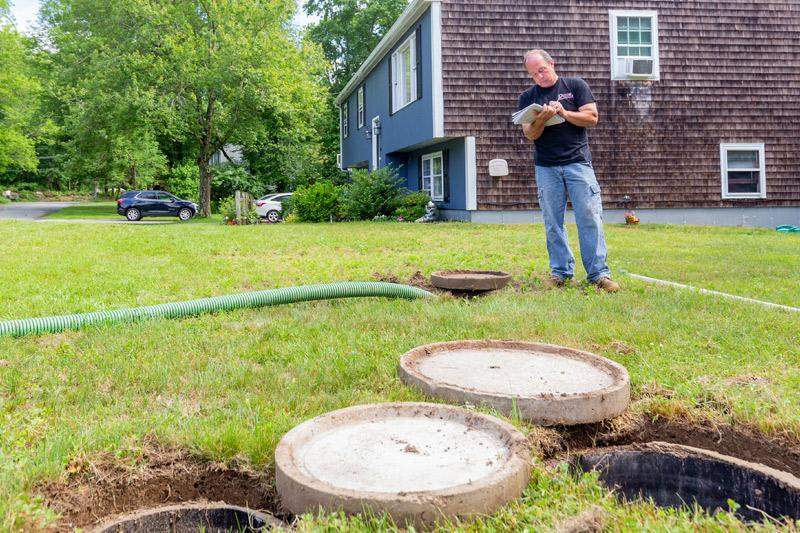
A failed Title 5 inspection lands like a deal-killer. It usually isn't. In Massachusetts, a failed septic inspection doesn't stop you from selling — it starts a clock and gives you a set of well-worn options. Knowing them turns a panic moment into a manageable line item.
Title 5 is the state's septic code, and an inspection is generally required within two years before you transfer a home that isn't on municipal sewer. When the inspector reports a failure, sellers picture the sale collapsing. In reality, thousands of Massachusetts homes sell every year with a failed or recently replaced system — there's a standard playbook.
The reframe: a failed Title 5 isn't a dead end — it's a known cost and a fixed timeline. The South Coast and Cape are full of older systems, so local buyers, agents, and lenders deal with this constantly.
By the end of this you'll understand:
→ What "failed" actually means (and "conditional pass")
→ Whether you can still sell — and the common ways it's handled
→ The timelines you're on once a system fails
→ Ballpark costs, the state tax credit, and betterment loans
What a "failed" inspection actually means
A failure means the system no longer meets Title 5 standards — common reasons include sewage backing up or breaking out to the surface, a cesspool or tank too close to groundwater or a well, or structural failure. There's also a middle outcome: a conditional pass, which means the system works but needs specific repairs to meet standard. A conditional pass usually lets the sale proceed as long as the listed repairs are completed within the required window.
The other key fact: a Title 5 inspection is generally valid for two years — or three years if you have the system pumped and documented every year on the inspection's anniversary.
Can you still sell? Yes — here's how it's handled
A failed system does not legally block the sale. The repair obligation runs with the property, and buyer and seller negotiate who handles it. The common arrangements on the South Coast:
→ Seller repairs before closing — cleanest for the buyer, but slow if you're mid-sale.
→ Price reduction — the buyer takes on the repair and the price reflects it.
→ Escrow holdback — money is set aside at closing to cover the replacement, and the buyer completes it after.
→ Written agreement assigning responsibility and a timeline.
A lender may have its own requirements, so the financing side matters too — another reason to loop in your agent and attorney early.
The timeline once a system fails
A failure starts a clock, set by your local Board of Health and state rules. As a general framework for non-emergency failures: you typically must file repair plans/permit applications within about three months of the failed report, and complete the repair or replacement within two years (24 months) of the inspection date. But if the Board of Health judges the failure an imminent health hazard, you can be required to act immediately. Your town's Board of Health is the authority that sets the exact deadlines, so confirm with them directly.
What it costs — and the help that exists
Replacing a failed system is the expensive part. A conventional septic replacement in Massachusetts commonly runs in the low-to-mid five figures — figure roughly $20,000 as a rough statewide average, with complex or engineered systems climbing toward $50,000 or more. On the Cape and other nitrogen-sensitive areas, an "enhanced" or innovative/alternative (I/A) system is often required, which costs more than a conventional one.
There's meaningful help, though:
→ State tax credit: Massachusetts offers a credit of up to $6,000 toward septic repairs on a primary residence, claimed over four years (capped at $1,500 per year).
→ Betterment loans: many communities offer low-interest loans through the local Board of Health to spread the cost out.
One Cape-and-coast note: Title 5 rules now push homeowners in designated nitrogen-sensitive watersheds toward upgraded systems on a set timeline unless the town secures a watershed permit. If your property is in one of those areas, the type of system you're allowed to install may be dictated for you — check with your town.
If you just failed: the first five moves
1. Get the full report — failure vs. conditional pass changes everything.
2. Call your town Board of Health — they set your real deadlines.
3. Get a licensed septic designer/installer out for a quote and plan.
4. Loop in your agent and attorney if you're selling — structure the deal (escrow, price, who repairs).
5. Line up the tax credit and any betterment loan before you write the check.
The bottom line
A failed Title 5 is a cost and a timeline, not the end of your sale. You can sell with a failed system through repairs, a price adjustment, or an escrow holdback — and you have roughly two years to fix it unless it's an active health hazard. Get the report, call your Board of Health, get a licensed quote, and use the tax credit and loan programs that exist to soften the bill.
A failed Title 5 isn't a closed door. It's a known number and a deadline — both of which you can plan around.
This article is general information, not legal, financial, or regulatory advice. Title 5 requirements, deadlines, and costs vary by town and change over time — confirm specifics with your local Board of Health, a licensed septic professional, and your real estate attorney.
Keep reading: Septic System Failures in MA: Title 5, Drain Fields & Frozen Lines · What Buyers Walk Away From After a Plumbing Inspection · 5 Plumbing Issues That Lower Your Home's Value
Facing a failed Title 5?
A licensed local pro can inspect, quote, and plan the repair or replacement. Browse trusted plumbers and septic pros on the South Coast and Cape with customer and peer scores.
Find a pro