
Septic System Failures in MA: Title 5, Drain Fields and Frozen Lines
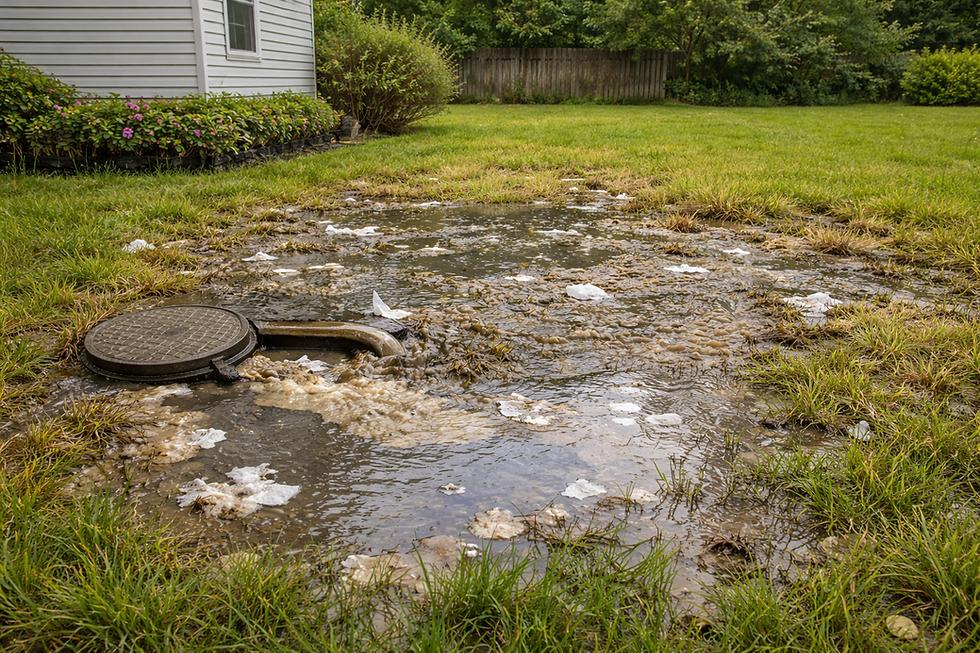
Off the public-sewer grid — on the Cape, the Islands, and the rural South Coast — your wastewater problem is a backyard problem. Sandy soil, a high water table, and seasonal use give these areas a septic failure pattern all their own, and Massachusetts has a specific law (Title 5) governing it. Here's how septic systems actually fail and how to stay ahead. The catch: a failed system is one of the most expensive repairs a home can face — and a $300 pump-out prevents most of it.
Homeowners new to septic treat it like a sewer line — flush and forget. It isn't. A septic system is a living, on-site treatment plant, and out here the soil and the seasons stress it in ways a city sewer never deals with.
The regional drivers are specific. Sandy coastal soil, high groundwater, and big swings between empty winters and packed summer rentals all push on the system — and a full Title 5 system replacement commonly runs $15,000–$40,000+ on the Cape and South Coast. The routine maintenance that prevents it costs a tiny fraction of that.
Here is the reframe: septic systems don't fail from one bad day — they fail from a saturated or neglected drain field. The tank separates solids; the drain field does the real work of filtering water into the soil. When groundwater floods it or sludge clogs it, the system has nowhere to send the water — and it backs up toward the house. Protect the field, and you protect the system.
By the end of this you'll be able to:
→ Recognize the early signs of a struggling septic system
→ Understand why coastal soil and seasons drive failure
→ Know what Title 5 requires when you sell
→ Keep the tank and drain field healthy year-round
The signs at the house and yard
Start here because… a septic system warns you before it fully fails.
Slow drains and gurgling throughout the house. When every drain slows at once and toilets gurgle, the tank or field is backing up — not a single clogged fixture.
Wet, spongy, or bright-green grass over the field. Soggy ground and lush growth above the drain field mean effluent is surfacing instead of filtering down — a field that's saturated or failing.
The coastal and seasonal causes
What you're dealing with is usually… the environment overwhelming the drain field.
High groundwater drowning the field. Coastal water tables rise with storms and spring thaw and flood the drain field, so effluent can't disperse — the leading cause of seasonal backups out here.
Seasonal-occupancy overload. A summer rental that triples in occupancy slams a system sized for far less — and old cesspools, common on the Cape, fail under that load fastest.
The winter cause
Reality is: an empty winter house has its own septic risk.
Frozen septic lines. In a vacant or lightly used winter home, low flow and shallow or poorly insulated pipes let lines freeze — a seasonal failure unique to cold climates with seasonal occupancy.
Keep a septic system healthy
1. Pump the tank every 2–3 years (sooner for heavy or seasonal use) — the single best way to protect the drain field.
2. Inspect on a schedule and have a pro check baffles, the tank, and the field for early trouble.
3. Protect the drain field: keep vehicles, heavy structures, and deep-rooted trees off it, and divert roof and sump water away.
4. Watch what goes down: no wipes, grease, or harsh chemicals that kill the bacteria doing the treatment.
5. Know Title 5: Massachusetts requires a Title 5 inspection (generally valid ~2 years) when you sell — a failed system can stall a closing, so test early.
Where this goes wrong
You skip pumping “because it's fine.” Sludge silently migrates to the drain field and clogs it — turning a $300 pump-out into a five-figure field replacement.
You park or build on the drain field. Compaction and roots ruin the soil's ability to filter — one of the fastest ways to kill a field.
You wait until you're selling to think about Title 5. A surprise failure mid-sale is the worst time to learn your system doesn't pass — inspect well before you list.
The build order
→ First, locate your tank and field and learn the system's age and last pump-out.
→ Second, get on a 2–3 year pumping and inspection schedule — the cheapest protection there is.
→ Third, protect the drain field from water, weight, and roots.
→ Last, schedule a Title 5 inspection well ahead of any sale, and address issues on your timeline.
The bottom line
A septic system is a treatment plant in your yard, and out here the soil and the seasons never stop testing it. Pump it, protect the drain field, and respect Title 5 — and you keep a routine $300 job from becoming a $30,000 one.
The tank gets the attention, but the drain field does the work. Protect the field, and the system lasts.
On septic and want to stay ahead?
Browse trusted local SouthCoast plumbers and septic specialists who pump, inspect, and handle Title 5 — before a backup or a sale forces it.
Find a plumber