
What Freezing Winters Do to Plumbing (And How to Prevent It)
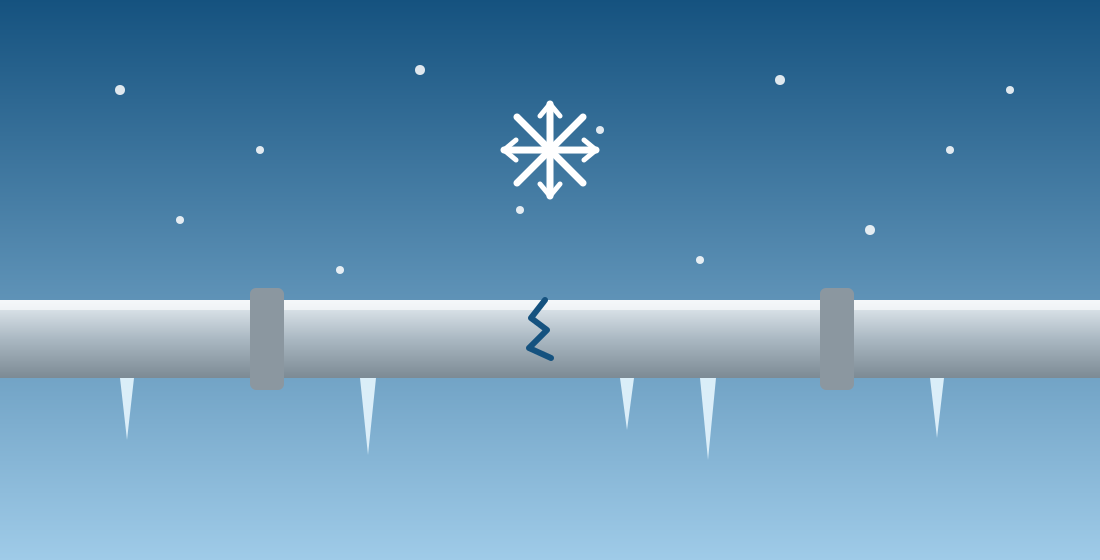
A frozen pipe doesn't break because ice is heavy — it breaks because trapped water has nowhere to go. Roughly 250,000 U.S. homes flood from frozen pipes every winter, and the real damage comes at the thaw. Here's exactly what the cold does and how to stop it. The catch: the prevention is cheap and the cure is a four-figure cleanup.
Most people picture a frozen pipe splitting where the ice forms. That's not quite it. Water expands as it freezes and pushes — but the burst usually happens in the unfrozen section between the ice plug and a closed faucet, where pressure has nowhere to escape. Understanding that is the key to preventing it.
The stakes are steep. A burst pipe costs $400–$1,500 to repair plus $1,000–$2,000 in water cleanup, and frozen-pipe claims are among the largest and most common winter insurance losses — recent average payouts have topped $30,000. New England's winters and old, under-insulated homes are a perfect setup.
Here is the reframe: you don't prevent frozen pipes by fighting the cold — you prevent them by denying the pressure. Keep water moving, keep vulnerable pipes warm, and relieve the pressure, and ice loses its ability to burst the line. The cold can't hurt a pipe that has somewhere to expand.
By the end of this you'll be able to:
→ Understand why frozen pipes actually burst
→ Identify the most vulnerable pipes in your home
→ Prevent freezes with cheap, proven steps
→ Know what to do the moment you suspect a frozen pipe
Why the cold bursts a pipe
The key thing to know is… the burst is about trapped pressure, not the ice itself.
Water expands as it freezes. An ice plug forms in the cold spot — usually an exterior wall, crawlspace, or unheated basement.
Pressure builds behind it. As the plug grows, it pushes water toward the faucet. With the tap closed, pressure spikes in the trapped section and the pipe splits — often where it isn't even frozen.
Where freezes happen first
What you're dealing with is usually… a few predictable cold spots, not the whole house.
Exterior-wall and unheated-space pipes. Lines in outside walls, attics, crawlspaces, and cold basements freeze first — common in older SouthCoast homes with little insulation.
Outdoor faucets and hose bibs. A hose left connected traps water in the spigot, which freezes and cracks the line behind it — a classic, avoidable burst.
How to prevent it
Rule of thumb: warm the pipe, move the water, relieve the pressure.
Insulate. Foam sleeves on exposed pipes in cold spaces are cheap and effective. Seal drafts near pipe runs.
Let it drip. On the coldest nights, a slow trickle from vulnerable faucets keeps water moving and relieves pressure — the single best emergency-night trick.
Keep the heat on and the doors open. Don't set back the thermostat too far at night, and open cabinet doors so warm air reaches pipes under sinks on exterior walls.
Beat the freeze — before and during
Before winter: disconnect and drain hoses, shut off and drain outdoor-faucet lines, insulate pipes in cold spaces, seal drafts.
On the coldest nights: let vulnerable faucets drip, open under-sink cabinets, keep heat at a steady temperature.
If a pipe is frozen (no flow): open the faucet, gently warm the pipe with a hair dryer or space heater — never an open flame — and find your shutoff in case it has already cracked.
Where this goes wrong
You set the heat way back to save money. The savings vanish the moment a $30,000 burst happens behind a wall.
You leave a hose connected. It's the most common and most preventable winter burst there is.
You thaw with a torch. Open flame cracks pipes and starts fires — gentle, even heat only.
The build order
→ First, disconnect hoses and drain outdoor faucets — free, and it kills the most common burst.
→ Second, insulate exposed pipes and seal drafts before the first hard freeze.
→ Third, on bitter nights, drip faucets and open cabinets.
→ Last, know your main shutoff so a frozen pipe that cracks doesn't become a flood.
The bottom line
Frozen pipes burst from trapped pressure, and pressure is exactly what cheap prevention relieves. A few dollars of foam and a dripping faucet beat a four-figure thaw every single winter.
Ice doesn't break pipes — trapped water does. Give it somewhere to go, and winter loses.
Tools you'll need for this job
If you want to do it yourself, here are the tools you'll need:
As an Amazon Associate, SouthCoast Plumbers earns from qualifying purchases.
Tools & parts for this fix
Winterizing supplies worth stocking:
As an Amazon Associate, SouthCoast Plumbers earns from qualifying purchases. Prices and availability are set by Amazon.
Worried about a freeze this winter?
Browse trusted local SouthCoast plumbers to winterize the vulnerable spots — or to help fast if a pipe has already burst.
Find a plumber