
The Hidden Pipe Issue That Can Destroy Your Foundation
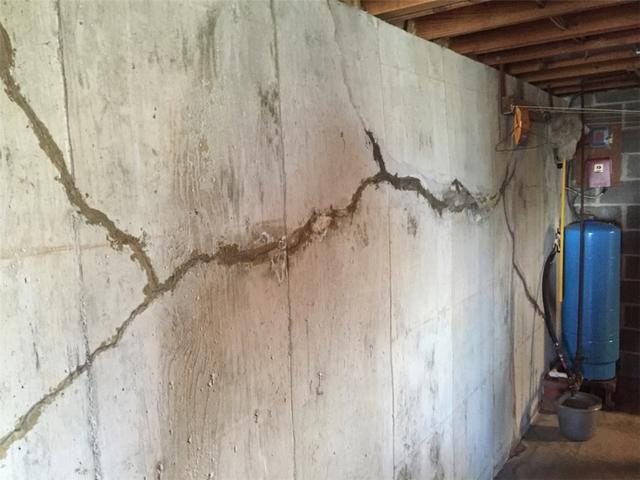
A leak the width of a pencil tip, running under your concrete slab, can quietly undermine the ground your house sits on. Slab leak repair averages about $2,300 — but the structural damage it causes first is what turns it into a five-figure problem. Here's how to catch it early. The catch: the foundation rarely cracks first; your water bill does.
Most homeowners think of a foundation problem as a cracking, shifting, settling issue — something in the soil or the concrete. Often, the real culprit is plumbing. A supply or drain line runs under or through your slab, and when it leaks, it doesn't just waste water. It erodes and saturates the soil the foundation rests on.
This is common enough to have its own name in the trade: a slab leak. Detection alone runs $150–$400, the repair averages $2,300, and if it has been running long enough to move soil or heave the slab, the foundation repair on top of it can reach five figures.
Here is the reframe: the danger isn't the water you can see — it's the dirt you can't. A slab leak doesn't flood your living room. It washes out the compacted soil under one corner of the house, and that void is what lets the foundation settle, crack, and move. Fix the pipe early and the soil recovers. Wait, and you're repairing the house, not the plumbing.
By the end of this you'll be able to:
→ Understand how a buried pipe leak threatens your foundation
→ Read the five early warning signs before a crack appears
→ Confirm a suspected leak with a simple meter test
→ Know why this is one to call a pro on fast
How a pipe leak becomes a foundation problem
The idea is… water under pressure escaping below your slab does its worst damage to the soil, not the concrete. Compacted soil holds your foundation level. Saturate it or wash it away and you create a void, and the slab drops into it.
Supply-side leaks erode. A pressurized hot- or cold-water line sprays continuously, cutting a channel through soil like a tiny hose left running underground.
Drain-side leaks saturate. A cracked sewer or drain line under the slab soaks the soil, which then swells and shifts as it dries and re-wets — the cycle that heaves and cracks concrete.
The warning signs that show up first
What you're dealing with is usually… a cluster of small clues, weeks before any crack. No single one is proof, but two or three together is a strong signal.
A water bill that climbs for no reason. A continuous underground leak shows up as a steadily rising bill while your usage stays the same.
A warm spot on the floor. A hot-water slab leak heats the floor above it — you can often feel it barefoot.
The sound of running water with everything off. Quiet the house, put your ear to the floor, and listen.
Pressure that's dropped. Water escaping before it reaches your taps means weaker flow throughout the house.
New cracks, sticking doors, or damp baseboards. These are the later signs — the point where the soil has already moved.
Confirm it before you panic
Rule of thumb: the water meter never lies. Turn off every fixture and appliance in the house, then look at the meter. If the dial or the small leak-indicator is still moving, water is escaping somewhere in the system — and if your fixtures are all dry, the slab is a prime suspect.
Run this today — the meter test
1. Shut off every faucet, the dishwasher, the washing machine, and the ice maker.
2. Find your water meter (usually near the street or in the basement) and note the reading or the leak-indicator dial.
3. Wait 30 minutes without using any water.
4. Check the meter again. Any movement = water is leaving the system.
5. Movement with all fixtures dry and a warm floor or rising bill — call a plumber for slab-leak detection now, not next month.
Where this goes wrong
You blame the foundation first. Calling a foundation contractor before a plumber means you may pay to level a slab that's still being undermined by a running leak.
You wait out the warm spot. A heated patch of floor is a hot-water line actively leaking — every day it runs is more soil gone.
You assume a small bill bump is nothing. Underground, “small and steady” is exactly what a slab leak looks like.
The build order
→ First, run the meter test — free, and it confirms or clears a hidden leak today.
→ Second, check for the warm spot and listen for running water.
→ Third, if the meter moves, call a plumber for electronic slab-leak detection before any concrete or foundation work.
→ Last, address the soil and any foundation movement only after the pipe is fixed and dry.
The bottom line
A foundation is only as level as the soil under it, and a buried leak attacks that soil quietly for months. The cheapest version of this repair is the one you catch from a water bill, not a wall crack.
The crack in the wall is the last chapter. The story starts at the meter — read it early, and the foundation never gets to page two.
Not sure how bad it is — or who to call?
Browse trusted local plumbers across the SouthCoast with customer and peer scores, and get a real set of eyes on it before a small problem becomes a big one.
Find a plumber