
No Hot Water? Reset and Troubleshoot Your Water Heater
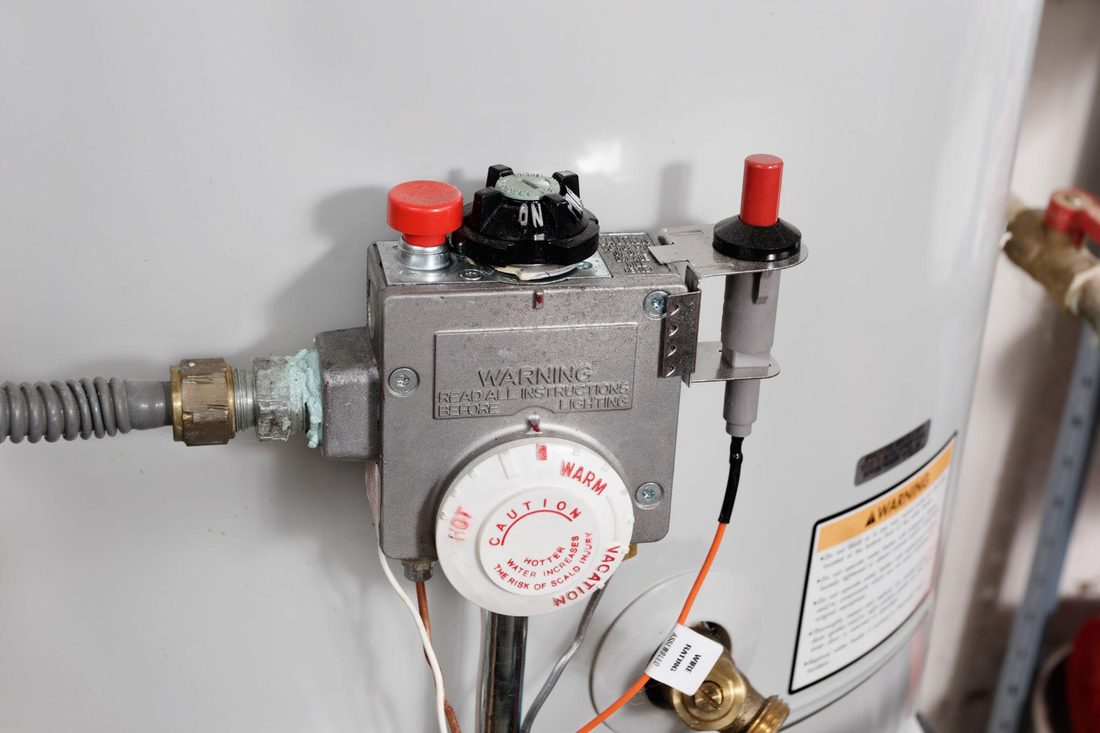
A cold shower feels like a dead water heater and a big bill. Often it's a tripped reset or a pilot that went out — a two-minute fix. The catch: a water heater mixes electricity, gas, and scalding water, so a few specific steps are strictly hands-off.
People assume no hot water means the tank is shot. Usually it isn't. Electric heaters trip a safety switch; gas heaters lose a pilot flame. Both are common, both have a defined reset, and neither means you're buying a new unit today. What matters is knowing your type — electric or gas — because the troubleshooting splits cleanly from there.
The reframe: no hot water isn't one failure — it's a symptom with a short menu of causes, most of which reset. Dead electric heater? A safety switch. Cold gas heater? A pilot light. Warm-but-not-hot, or running out fast? A thermostat setting or sediment. Read the symptom, and the fix picks itself.
By the end of this you'll be able to:
→ Identify electric vs gas and check power/gas supply
→ Press the reset (electric) or relight the pilot (gas)
→ Read "warm not hot" and "runs out fast" symptoms
→ Follow the one rule: gas smell or leaking tank = stop and call now
Tools you'll need for this job
If you want to do it yourself, here are the tools you'll need:
- Non-contact voltage tester / multimeter
- Water heater element wrench
- Replacement element & thermostat
- Water heater insulation blanket
As an Amazon Associate, SouthCoast Plumbers earns from qualifying purchases.
Before anything: if you smell gas, leave and call
If you smell rotten eggs near a gas heater, don't touch switches or relight anything. Leave the house and call your gas utility from outside. Same for water pooling around the base of the tank — shut the water supply and call a pro. These are not troubleshooting steps.
Phase 1 — Confirm power or gas
Start here because… the heater can't make heat without its energy source — check that first.
Electric: check the breaker for the water heater; if it's tripped, reset it once. Watch-out: a breaker that trips again right away signals an electrical fault — stop there.
Gas: make sure the gas valve is on and other gas appliances are working, so you know gas is actually flowing to the house.
Phase 2 — Reset or relight
Most of the time: each type has one main reset, and it solves a large share of "no hot water" calls.
Electric — press the reset button. Cut power at the breaker, pop the upper access panel, fold back the insulation, and press the red high-limit reset button. Restore power and wait — an electric tank needs time to reheat. Watch-out: if it trips again, a heating element or thermostat is failing — that's a pro repair.
Gas — relight the pilot. Follow the lighting instructions printed on the tank exactly (turn to "Pilot," hold the button, ignite, hold ~30–60 seconds, release). Watch-out: if it won't stay lit, the thermocouple or gas valve is likely the issue — call a pro rather than forcing it.
Phase 3 — "Warm not hot" or "runs out fast"
The key thing to know is… if there's some hot water, it's a setting or sediment, not a power failure.
Check the thermostat setting. Aim for about 120°F — safe and efficient. If someone turned it down, that's your "lukewarm."
Suspect sediment. A tank that runs out quickly or knocks/pops is often full of mineral sediment (common with SouthCoast hard water), which steals capacity. Draining/flushing the tank helps; if you're not comfortable, a plumber can flush it and check the anode rod.
The symptom-to-fix cheat sheet
• Stone cold, electric → breaker, then the red reset button.
• Stone cold, gas → gas on, then relight the pilot.
• Warm, not hot → raise thermostat toward 120°F.
• Hot, but runs out fast → sediment; flush the tank.
• Gas smell or pooling water → stop, leave, call now.
Where this goes wrong
You keep resetting what keeps tripping. A reset or breaker that won't hold is a failing part, not a stubborn button. Repeated resets on an electric heater can be dangerous.
You force a pilot that won't stay lit. That's a thermocouple or valve problem. Repeated attempts release gas — don't.
You ignore the drip pan. Water around the base means the tank is leaking, and a leaking tank doesn't get repaired — it gets replaced before it fails completely.
The build order
→ First, rule out a gas smell or a leaking tank — safety before troubleshooting.
→ Second, confirm power (electric) or gas flow.
→ Third, press the reset or relight the pilot — once.
→ Last, if it won't hold, won't stay lit, leaks, or only runs lukewarm after a flush, call a plumber.
The bottom line
No hot water is usually a reset, not a replacement. Know your type, check the energy source, and try the one defined reset. But a water heater earns its respect — when the safety steps say stop, stop.
Reset once, relight once. If it won't hold, it's not a button — it's a part. And a gas smell ends the DIY.
Tools & parts for this fix
Diagnose and fix with:
- Non-contact voltage tester / multimeter
- Water heater element wrench
- Replacement element & thermostat
- Water heater insulation blanket
As an Amazon Associate, SouthCoast Plumbers earns from qualifying purchases. Prices and availability are set by Amazon.
Won't reset, won't stay lit, or the tank is leaking?
That's a pro job — and a leaking tank shouldn't wait. Browse trusted local plumbers on the SouthCoast with customer and peer scores.
Find a plumber