
Where Is the Reset Button on a Water Heater? (And Why It Keeps Tripping)
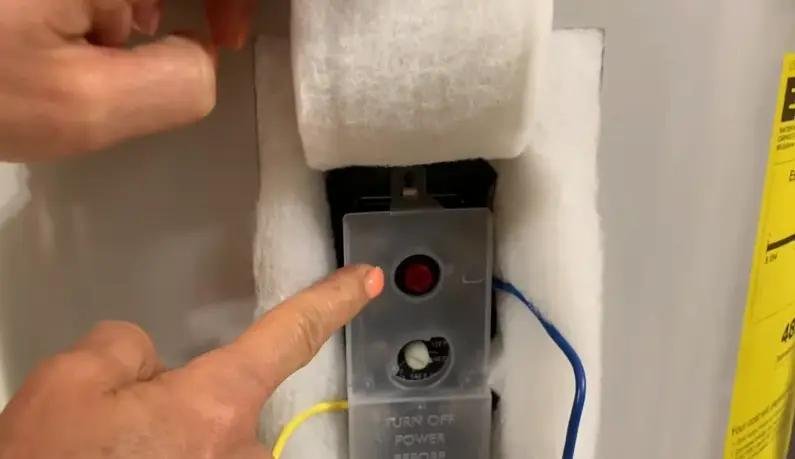
No hot water this morning? On an electric water heater there's a red button that brings it back to life in under a minute. But here's the part nobody tells you: if that button trips once, it's a fluke. If it keeps tripping, it's not asking to be reset — it's warning you something's failing.
That red button is the high-limit switch, a safety cutoff that kills power when the water gets dangerously hot. It exists to stop a runaway heater. Pressing it restores power, but it never addresses why the heater overheated — and on the South Coast, where hard water and aging tanks are the norm, the why matters.
The reframe: the reset button is a safety device, not a fix. One trip is worth a reset. A pattern of trips is a diagnosis.
By the end of this you'll be able to:
→ Find the reset button and use it safely
→ Know the one safety step to take before you touch it
→ Understand what a single trip versus repeated trips means
→ Recognize when it's a thermostat, an element, or a call to a pro
Tools you'll need for this job
If you want to do it yourself, here are the tools you'll need:
As an Amazon Associate, SouthCoast Plumbers earns from qualifying purchases.
Where the reset button is
On an electric water heater, it's behind the upper access panel. Pop off the metal cover on the upper third of the tank, fold back the insulation and the plastic safety guard, and you'll see a red (sometimes black) button in the middle of the thermostat block. If it has tripped, it'll be popped out. Gas water heaters don't have this button — if you have gas and no hot water, the issue is the pilot, thermocouple, or gas valve, not a reset.
How to reset it safely
Shut the power off first. Go to your electrical panel and switch off the breaker for the water heater before you remove any panel or press anything. This is non-negotiable — there's high-voltage wiring right next to that button.
Then: with the breaker off, remove the upper panel, press the red button firmly until you feel or hear a click, replace the guard, insulation, and cover, and switch the breaker back on. Give it 30–60 minutes and check for hot water.
Watch-out: if you're not comfortable opening an electrical panel on the tank, stop here. This is a reasonable place to call a plumber, and there's no shame in it.
Why it keeps tripping — the part that matters
A reset that won't hold means the water genuinely overheated again, and the high-limit switch did its job. Common causes, roughly in order:
A failing thermostat. A stuck thermostat keeps the element heating past the safe limit, so the switch trips to stop it. The most common culprit.
A failing or shorted heating element. An element that's grounded out or stuck on overheats the water and trips the switch.
A worn-out high-limit switch itself. After years of cycling, the switch can trip early or stick.
Loose or corroded wiring. Bad connections generate heat and nuisance trips — common in older South Coast homes.
None of these are fixed by pressing the button again. Repeatedly resetting an overheating heater defeats the one safety that's protecting your home, so a button that trips more than once is a stop-and-call signal.
The safe reset routine
1. Switch off the breaker for the water heater — first, always.
2. Remove the upper access panel, fold back insulation and guard.
3. Press the red button until it clicks; reassemble.
4. Breaker back on; wait 30–60 minutes for hot water.
5. Tripped again? Stop. That's a thermostat or element fault — call a plumber.
The bottom line
The water heater reset button lives behind the upper panel, and on a one-time trip it'll get your hot water back in a minute — as long as you kill the breaker first. But it's a safety cutoff, not a repair. The moment it starts tripping again and again, the heater is telling you a thermostat, element, or wiring fault needs a real fix, and resetting it just silences the alarm.
Reset it once and move on. Reset it twice and pick up the phone.
Keep reading: No Hot Water? Reset and Troubleshoot Your Water Heater · How Hard Water Quietly Kills Water Heaters · What Professional Plumbers Do Every Year
Tools & parts for this fix
Keep these on hand for electric-element resets:
As an Amazon Associate, SouthCoast Plumbers earns from qualifying purchases. Prices and availability are set by Amazon.
Reset button keeps tripping?
That's a thermostat, element, or wiring fault — not a DIY reset. Browse trusted local plumbers on the South Coast with customer and peer scores.
Find a plumber