
How to Fix a Minor Pipe Leak Under the Sink
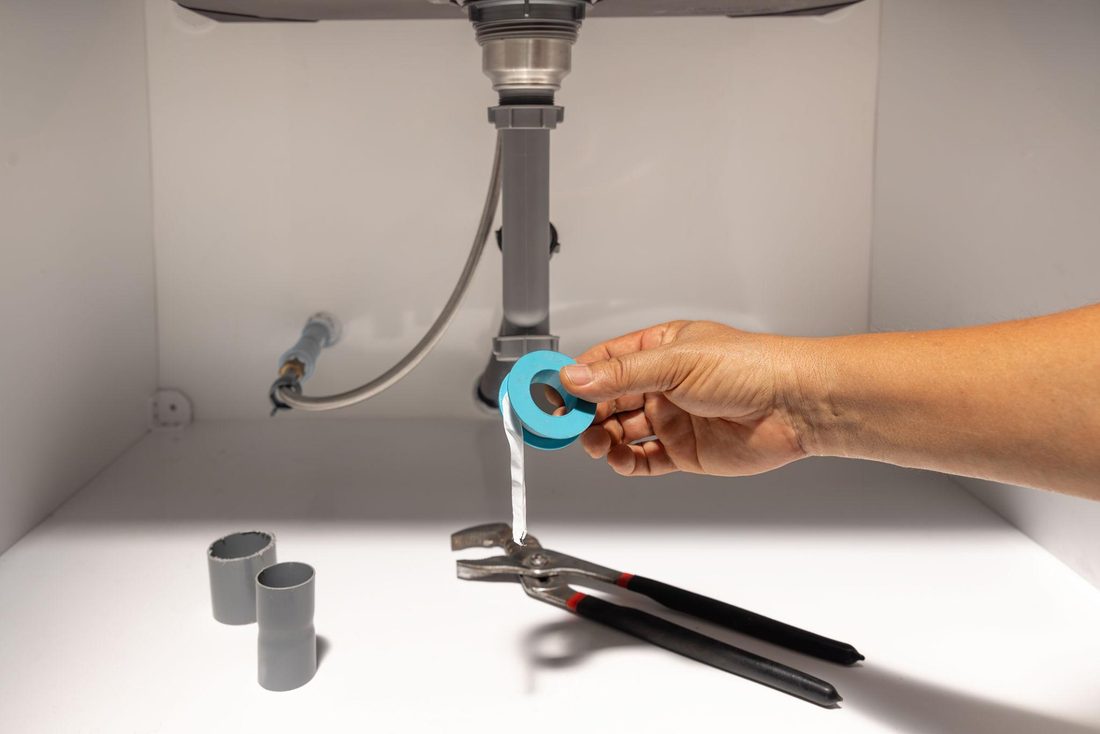
A little water under the sink rarely means a burst pipe. It usually means a loose nut or a worn washer — a few minutes with a wrench. The catch: small leaks waste big water (the average home loses around 10,000 gallons a year to leaks) and quietly rot the cabinet while you ignore them.
The instinct with any leak is to reach for tape or a tube of goo and seal it. That treats the puddle, not the cause. Under-sink and joint leaks come from a handful of specific points, and most of them tighten or swap out cleanly. Patch over them and you've hidden a problem that keeps dripping behind the fix.
The reframe: a minor leak isn't a hole in the pipe — it's a connection that came loose or a seal that wore out. Find the exact joint that's wet, and you'll almost always find a slip nut, a compression fitting, or a washer that just needs attention. The pipe itself is usually fine.
By the end of this you'll be able to:
→ Pinpoint which joint is actually leaking
→ Tighten or re-seal the three common under-sink connections
→ Tell a real fix from a temporary patch
→ Follow the one rule: water off and dry it before you judge the source
Phase 1 — Find the exact leak
The thesis: you can't fix a leak you haven't located, and water travels before it drips.
Shut off and dry everything. Close the under-sink supply valves, then wipe every pipe and joint bone-dry. Watch-out: water runs along a pipe and drips off the low point — the wet spot is rarely the source.
Run water and watch. Turn it back on, fill and drain the sink, and watch with a flashlight to see exactly which joint beads up first. Mark it.
Phase 2 — Fix the connection
The thesis: most under-sink leaks live at one of three joints, each with a clean fix.
Slip nut at the trap: hand-tighten, then a gentle quarter-turn with channel-lock pliers. If it still weeps, take the trap apart and replace the plastic slip washer inside — pennies. Watch-out: don't overtighten plastic; you'll crack it.
Compression fitting on a supply line: snug the nut a touch. Still leaking? Shut off, undo it, and wrap the threads with plumber's (PTFE) tape, or replace the supply line — a braided steel one is cheap and reliable.
Worn washer at a connection: open the joint, drop in the matching new washer or O-ring, and reassemble. The fix is a part that costs less than a coffee.
Phase 3 — The honest temporary patch
The thesis: a patch buys you hours, not a solution — and the clock is the whole point.
For a pinhole in the pipe itself, a pipe-repair clamp or self-fusing silicone tape will hold back a small leak short-term. Watch-out: a leak in the pipe (not a joint) means corrosion or a freeze crack, and a patch is a countdown, not a cure. Get a plumber on it.
The locate-and-fix routine
1. Valves off, wipe all pipes dry.
2. Run water; flashlight the joints to find the first bead.
3. Joint leak? Tighten gently, then re-seal or swap the washer.
4. Pipe leak? Clamp/tape temporarily and call a pro.
5. Put a dry paper towel under the joint overnight to confirm it's truly dry.
Where this goes wrong
You seal the puddle, not the joint. Water tracks downhill. Dry everything and watch it leak fresh, or you'll "fix" the wrong spot.
You overtighten. Cranking a plastic slip nut or compression fitting cracks it and turns a weep into a real leak. Snug, then a hair more.
You treat a pipe leak like a joint leak. A hole in the pipe body is corrosion or a freeze crack — tape holds for a day, not a season. That's a same-week pro call.
The build order
→ First, shut off, dry, and locate the true source — free, the step everything depends on.
→ Second, tighten or re-seal the joint — fixes most under-sink drips.
→ Third, swap a worn washer or a cheap braided supply line.
→ Last, if the pipe itself is leaking, it's behind a wall, or it returns after a proper fix, call a plumber.
The bottom line
A minor leak is a loose connection telling on itself, not a failed pipe. Find the joint, re-seal it without overdoing the torque, and you'll stop the drip and the slow damage that rides along with it.
A joint leak is a fix. A pipe leak is a clock. Dry it, find it, and don't patch what you should repair.
Leak coming from the pipe itself, or behind a wall?
Don't wait on that one. Browse trusted local plumbers on the SouthCoast with customer and peer scores.
Find a plumber