How to Clear a Clogged Drain Without Wrecking Your Pipes
A slow or stopped drain is the most common call a plumber gets — and the one homeowners most often make worse. Most clogs clear in fifteen minutes with tools you already own. The catch: the fastest-looking fix, a bottle of chemical drain cleaner, is the one that quietly eats your pipes.
Everyone reaches for the same thing when the water won't go down: the blue bottle under the sink. It feels like the easy button. It isn't. Chemical drain cleaners generate heat, sit against your pipe walls, and can soften PVC and corrode older metal joints — and if they don't clear the clog, you now have a pipe full of caustic liquid the plumber has to deal with before they can even start.
Here's the reframe that makes drains easy: a clog isn't a wall you blast through — it's a buildup sitting in one specific spot. Find the spot, lift the gunk out, and the water runs. The whole job is mechanical, not chemical. You're not fighting the drain. You're just clearing one elbow of pipe.
By the end of this you'll be able to:
→ Clear the three most common household clogs by hand
→ Use a plunger and a snake so they actually work
→ Follow the one rule that keeps your pipes safe: mechanical before chemical
→ Know the exact moment to stop and call a pro
Tools you'll need for this job
If you want to do it yourself, here are the tools you'll need:
- Hand-crank drain snake / auger (25 ft)
- Zip-It hair-clog drain tool
- Enzyme drain cleaner (safe for pipes)
- Sink plunger
As an Amazon Associate, SouthCoast Plumbers earns from qualifying purchases.
Phase 1 — Start at the surface
The idea is… most clogs are within arm's reach. Hair, grease, food, and soap scum collect right at the drain opening or in the trap a few inches down. You almost never need to go deep.
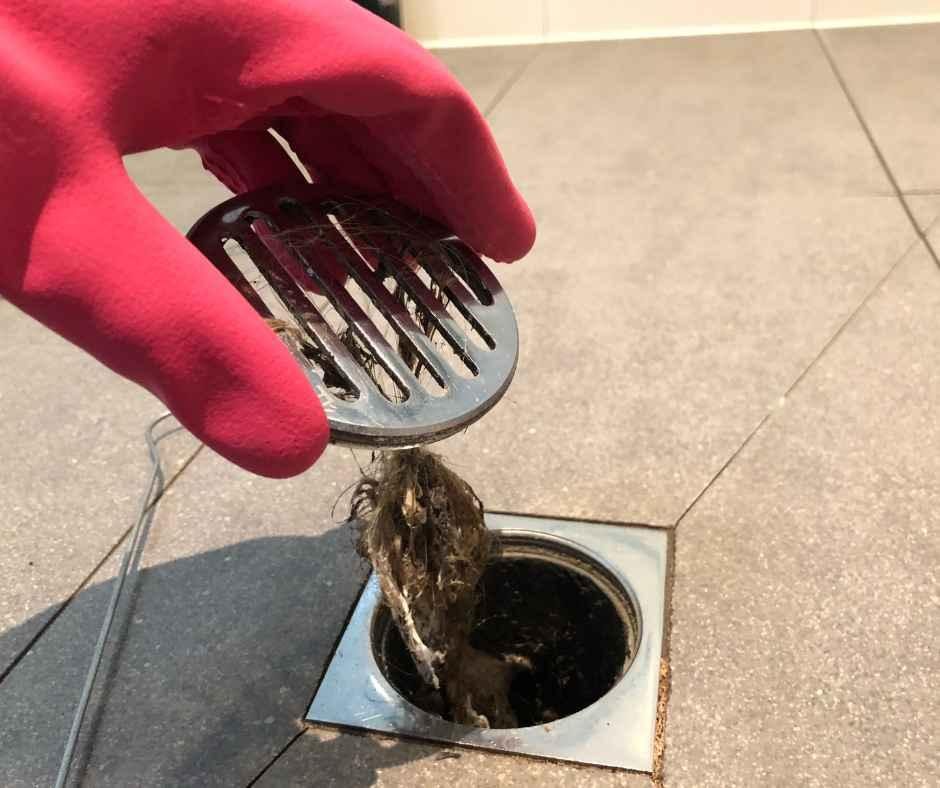
Pull the visible gunk. Pop out the sink stopper or shower strainer and clear what you can see — a bent wire or a cheap plastic "zip" tool grabs hair clumps fast. Watch-out: wear gloves; what comes up is not pleasant.
Flush with hot water. For a kitchen sink that's draining slow from grease, a kettle of very hot (not boiling, if you have PVC) water followed by a squirt of dish soap can loosen a soft clog on its own.
Phase 2 — Apply pressure and reach
In most cases: if the surface is clear and it still won't drain, the clog is in the trap. Now you move it with force or pull it out with a snake.
Plunge it right. Get a tight seal over the drain. On a double kitchen sink, plug the other basin first. On a tub or bathroom sink, stuff a damp rag in the overflow hole — otherwise your plunging force escapes out the top and nothing happens. Then push and pull steadily a dozen times.
Snake the trap. A hand snake (drain auger) is the single best $15 tool a homeowner can own. Feed the cable in, turn the handle as you go, and when you feel it grab, work it back and forth and pull the clog out. Watch-out: never run a regular snake into a toilet — it'll scratch the bowl. Toilets get a closet auger.
Phase 3 — Open the trap (the confident DIY step)
The key thing to know is… the P-trap is the U-shaped pipe under the sink, and it's designed to come apart. This is where rings, food, and grease settle.
Bucket, then unscrew. Put a bucket underneath, hand-loosen the two slip nuts on the trap, and let it drain into the bucket. Clean it out, check the wall pipe behind it, and screw it back on. Watch-out: snug is enough — overtightening plastic nuts cracks them and starts a leak.
Run this today — the 15-minute triage
1. Pull and clear the stopper/strainer by hand.
2. Pour a pot of hot water + dish soap (grease clogs).
3. Seal the overflow / second basin, then plunge 12–15 times.
4. Still slow? Snake the trap, or unscrew and clean the P-trap.
5. Cleared? Run hot water 60 seconds to flush the loosened debris.
Where this goes wrong
You skip straight to chemicals. They damage pipes, rarely clear a full clog, and make the eventual repair worse and more dangerous for whoever opens that pipe.
You plunge without sealing the overflow. All your effort vents out the top and the clog never moves — people give up thinking it's "too deep" when they just lost their seal.
You force the snake against hard resistance. If it stops dead and won't pass, that's often a collapsed line or a main-drain blockage — pushing harder doesn't help and can damage the pipe.
The build order
→ First, clear the surface — free and instant.
→ Second, plunge with a proper seal — the biggest lever.
→ Third, snake or open the trap — handles most stubborn clogs.
→ Last, if multiple drains back up at once or water comes up elsewhere when you run a fixture, stop. That's a main-line issue and it's a pro's job.
The bottom line
A clog is a spot, not a wall. Find it and lift it out, and you'll fix nine out of ten yourself for the price of a snake. The one rule that protects your home: mechanical before chemical, always.
The plunger is yours. The snake is yours. The chemicals belong in the trash. Clear the spot — don't poison the pipe.
Tools & parts for this fix
What clears a drain without chemicals:
- Hand-crank drain snake / auger (25 ft)
- Zip-It hair-clog drain tool
- Enzyme drain cleaner (safe for pipes)
- Sink plunger
As an Amazon Associate, SouthCoast Plumbers earns from qualifying purchases. Prices and availability are set by Amazon.
Clog won't budge — or backing up in more than one drain?
That's a main-line job. Browse trusted local plumbers on the SouthCoast with customer and peer scores.
Find a plumber