
Brown Water & Low Pressure? Your Galvanized Pipes Are Rusting Shut
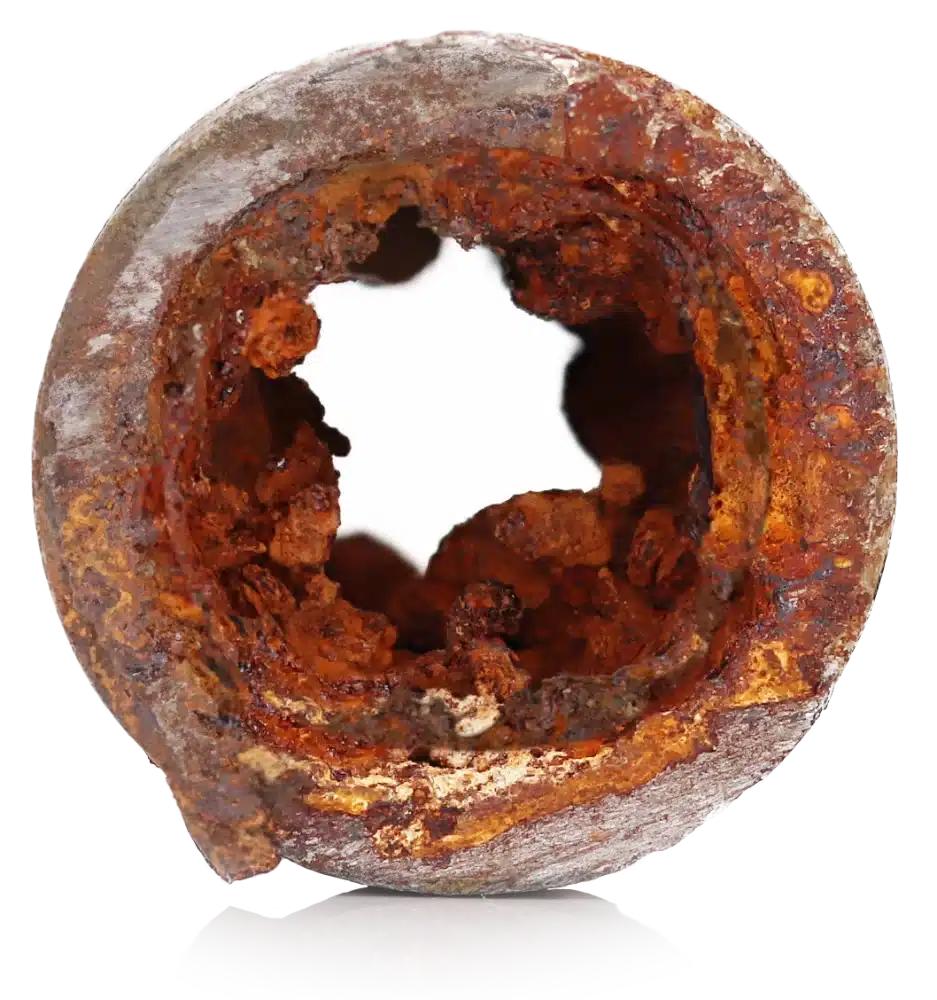
If your shower has gone weak, your hot water comes out tea-colored, and one fixture trickles while another runs fine, stop blaming the city. In a pre-1970 Massachusetts home, that's almost always galvanized supply pipe rusting closed from the inside. Here's how to confirm it and what your real options are. The catch: you can't “clean” it out — once it's rusting, the only cure is replacement.
Homeowners chase these symptoms one at a time — a new showerhead here, a pressure complaint there. They're not separate problems. They're one aging system, and the symptom is the inside of the pipe slowly disappearing into your water.
The timeline is the giveaway. Galvanized steel pipe was standard in older MA homes and lasts roughly 40–70 years — meaning most of it is now decades past due. A whole-home repipe typically runs $4,000–$15,000 depending on size and access, but a single hidden pinhole leak inside a wall can cost nearly that in damage alone.
Here is the reframe: galvanized pipe doesn't wear out evenly — it rusts itself shut. The zinc coating erodes, then the steel underneath corrodes inward, narrowing the bore and shedding rust into your water. The opening shrinks until pressure drops and the water browns. You're not losing pressure; you're losing pipe.
By the end of this you'll be able to:
→ Confirm whether your pipes are galvanized
→ Read the three symptoms that point to corrosion
→ Understand why patching one section fails
→ Decide between copper and PEX for a repipe
How to confirm it's galvanized
Start here because… the diagnosis is half the decision.
The magnet-and-scratch test. Galvanized pipe is dull silver-gray, magnetic, and shows shiny gray metal when scratched (copper is penny-colored; PEX is plastic). Check the exposed lines at your meter or in the basement.
The age of the home. If the house predates the early 1970s and hasn't been repiped, galvanized supply lines are the default assumption — the symptoms just confirm it.
The three symptoms that confirm corrosion
What you're dealing with is usually… rust narrowing the pipe and tinting the water.
Falling water pressure. As the bore rusts smaller, flow drops — often worst at the fixtures farthest from the main and on the hot side, where corrosion runs faster.
Brown or rusty water. Discolored water, especially after the taps sit unused overnight, is rust shedding from the pipe walls — the clearest sign the steel is going.
Uneven flow between fixtures. One bathroom strong, another weak, is corrosion advancing at different rates through the branches — a pattern only old metal pipe produces.
Why you can't just patch it
Reality is: replacing one rusted length only moves the next failure down the same tired line.
The whole system is the same age. Cut in a new section and the corrosion simply shows up at the next-oldest length — you're chasing failures through a system that's all expiring together. That's why plumbers push a planned repipe over endless spot fixes.
The repipe decision: copper vs PEX
Copper: proven, rigid, long-lived, and handles heat well — the traditional choice, but pricier and more labor to install.
PEX: flexible plastic tubing that's faster to run, costs less, resists scale, and tolerates a freeze better — now the most common repipe material.
Phased vs whole-home: a phased repipe spreads cost but leaves old pipe in the walls; a whole-home repipe ends the problem in one project.
What a plumber does: confirms the material, checks pressure at multiple fixtures, and prices a repipe with copper or PEX based on your layout, budget, and how much is accessible.
Where this goes wrong
You treat the symptoms separately. New showerheads and pressure tweaks paper over a system-wide failure — the brown water and weak flow come right back.
You patch one length at a time. Each “fix” just relocates the next leak; you spend repipe money in installments and still have old pipe.
You wait for a pinhole. Corroded galvanized eventually leaks inside a wall — an emergency repair plus water damage that dwarfs a planned repipe.
The build order
→ First, confirm the pipe material and the home's plumbing age.
→ Second, have a plumber check pressure at several fixtures to map how far the corrosion has spread.
→ Third, get a repipe quote in both copper and PEX so you can weigh cost against longevity.
→ Last, plan the repipe on your schedule — before a hidden pinhole sets it for you.
The bottom line
Brown water and weak pressure in an old home aren't a mystery — they're galvanized pipe rusting shut. You can't clean it out, and patching just postpones the next leak. A planned repipe in copper or PEX ends the whole pattern at once.
You're not losing pressure — you're losing pipe. Replace it on your terms, not the leak's.
Brown water or weak pressure?
Browse trusted local SouthCoast plumbers who diagnose galvanized corrosion and repipe in copper or PEX — on a plan, not in a panic.
Find a plumber