Outdoor Shower Plumbing on Cape Cod: What Homeowners Should Know
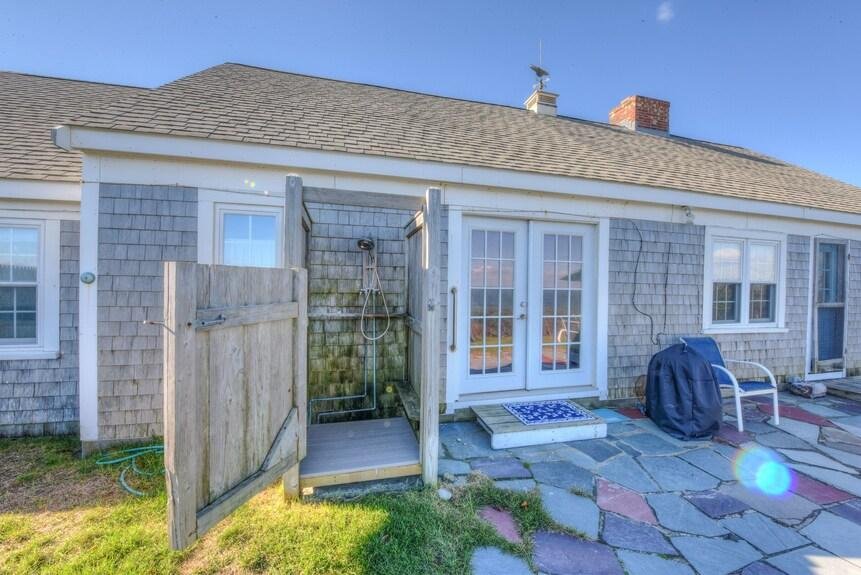
An outdoor shower is as Cape Cod as gray shingles and beach plums — rinse off the sand before you ever hit the back door. But the part that makes or breaks one isn't the cedar enclosure everybody photographs. It's the plumbing behind it, and on a coastal property that plumbing has to handle sand, salt, and a hard winter freeze.
Most outdoor-shower regret traces back to two decisions made before the first board goes up: how the water gets there, and where it goes after it drains. Get those right and you've got a fixture that lasts decades. Get them wrong and you're looking at a frozen burst pipe in February or a soggy, sand-clogged mess by August.
The reframe: an outdoor shower isn't a summer luxury — it's year-round plumbing that happens to live outside. On the Cape, the climate is the design constraint.
By the end of this you'll understand:
→ How the water supply is run — hot/cold vs. cold-only
→ Why drainage and sand are the real make-or-break
→ What winterizing actually requires on the Cape
→ Where the line is between a DIY rinse and a plumber's job
The water supply: cold-only or hot-and-cold
The simplest outdoor shower is cold-only, tapped off an existing exterior line. Plenty of Cape homes run it this way — a quick rinse doesn't need to be warm. If you want hot water too, a plumber runs both supply lines out through the wall from the home's system, which means a more involved install and more to winterize later. Decide this first; it drives everything downstream.
The detail that matters here: however it's run, the supply needs a way to be shut off and drained from inside before winter. A line you can't drain is a line that bursts.
Drainage and sand: the part people skip
Where the water goes is the question that wrecks the most outdoor showers. Your options range from simple to serious:
→ A gravel dry well — the water soaks into a bed of stone below the shower. Common on the Cape's sandy soil, which drains beautifully, but it has to be sized and sited right or it backs up.
→ A piped drain to an approved point — needed where soil drains poorly or codes require it.
And then there's sand. This is the Cape-specific killer. Sand rinsed off feet and gear goes straight down the drain and packs solid over a season. A proper sand trap or a removable strainer is the difference between a drain that lasts and one you're snaking every August. Don't let anyone install an outdoor shower here without one.
Winterizing: non-negotiable on the Cape
A buried or wall-run water line left full over a Cape winter will freeze and split — and you won't find out until you turn it on in May. Before the first hard freeze:
→ Shut the indoor valve that feeds the shower
→ Open the shower taps to drain the lines fully (a drain-down valve on the supply makes this easy)
→ Blow out the line with air if your setup calls for it, and disconnect any hose bib
This is especially critical for the second homes and seasonal rentals all over the Cape and South Coast that sit empty all winter. A burst outdoor line on a vacant house can run undetected and feed water back toward the home. If you're not on the Cape to do it, have a plumber winterize it as part of closing the house.
Before you build, settle these
1. Cold-only or hot-and-cold? It changes the install and the winterizing.
2. Where does the water drain? Dry well vs. piped — and is the soil right?
3. Is there a sand trap? On the Cape, mandatory.
4. Can you drain the lines for winter? If not, redesign it.
5. Permit? Many Cape towns regulate new exterior plumbing and drainage — check first.
DIY vs. call a plumber
Mounting the enclosure and hooking a simple cold-water rinse to an existing exterior spigot is within reach for a handy homeowner. Running new hot and cold supply lines through the wall, tying into the home's system, installing a proper drain or dry well, and setting up a real winterizing valve are plumber's work — both for code and because the failure mode (a freeze burst inside the wall) is exactly the expensive kind. On a coastal property, paying once to do the plumbing right is cheaper than redoing the wall.
The bottom line
The cedar gets the compliments, but the plumbing decides whether your outdoor shower is a 20-year fixture or a February headache. Settle the supply, the drainage, and the sand trap before you build, make sure the whole thing can be drained for winter, and lean on a plumber for the parts that live inside the wall. On the Cape, that's not over-engineering — it's just building for the climate you actually have.
A Cape outdoor shower is summer fun built on winter-proof plumbing. Skip the second part and you only get one season.
Keep reading: Outdoor Faucet Freezing: The Fall Mistake That Bursts Pipes · What Freezing Winters Do to Plumbing · Find a Plumber on Cape Cod
Adding or winterizing an outdoor shower?
Supply lines, drainage, and freeze protection are a plumber's job on the coast. Browse trusted local plumbers on the South Coast and Cape with customer and peer scores.
Find a plumber